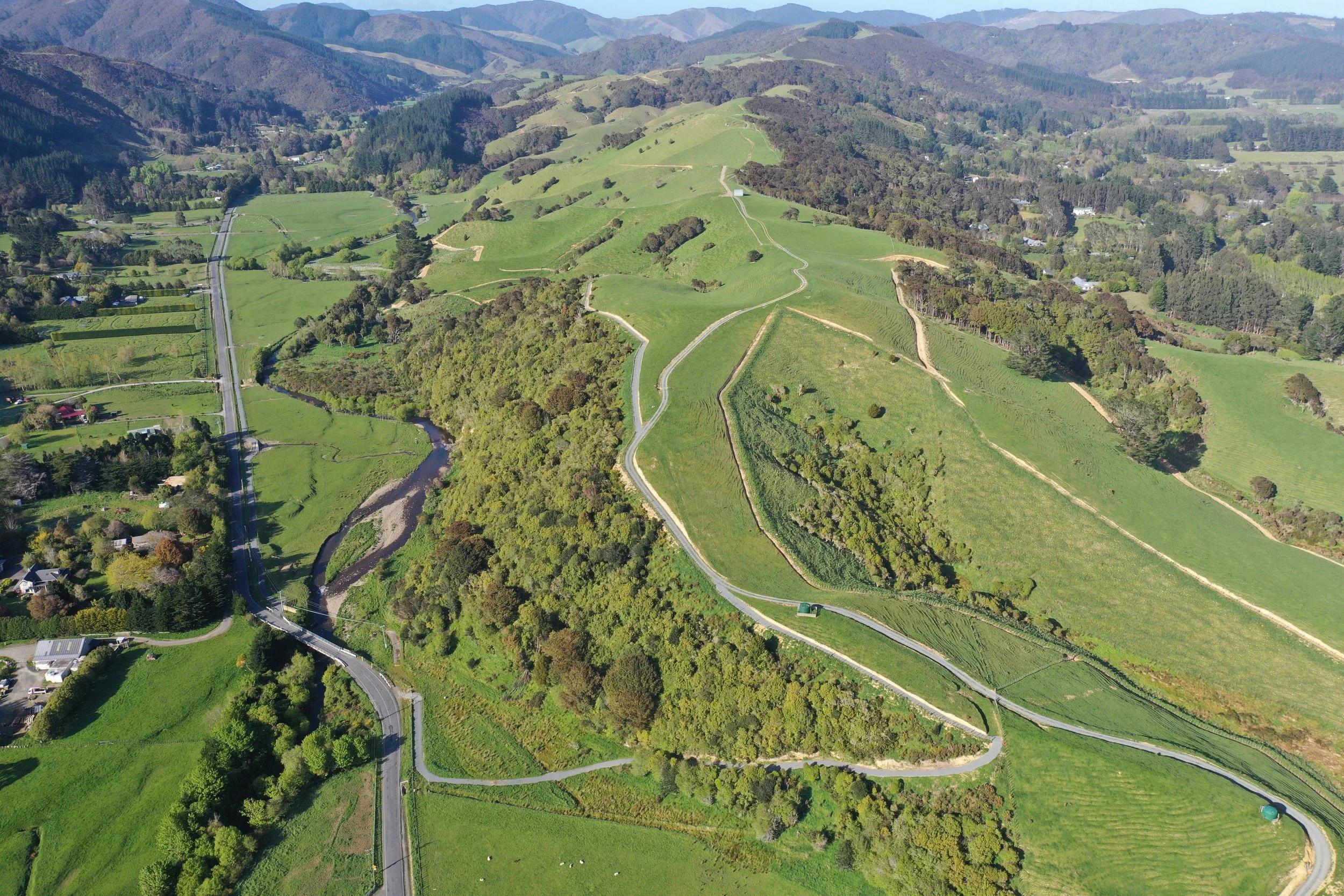
Picture a walk that begins at the Farm Shop and ends at a north-facing lookout over the valley.
Three kilometres, a gentle loop, the Mangaroa River flowing gently alongside you.
But this is not an ordinary track. Every ten steps or so, something is ready to eat. A heritage apple here. A medlar there. A handful of herbs growing low against the path, quietly waiting to be recognised. You reach out, and the land hands you something back.
This is the Fruit & Forage Loop. This winter, we are raising funds for it, with the help of Ma Earth, and part of a funding round that includes over 200 global nature regeneration projects.
The idea is simple, and old. For most of human history, food and the path home were the same thing. You knew the trees because you walked past them. You knew the medicine underfoot because someone showed you, and you showed someone else.
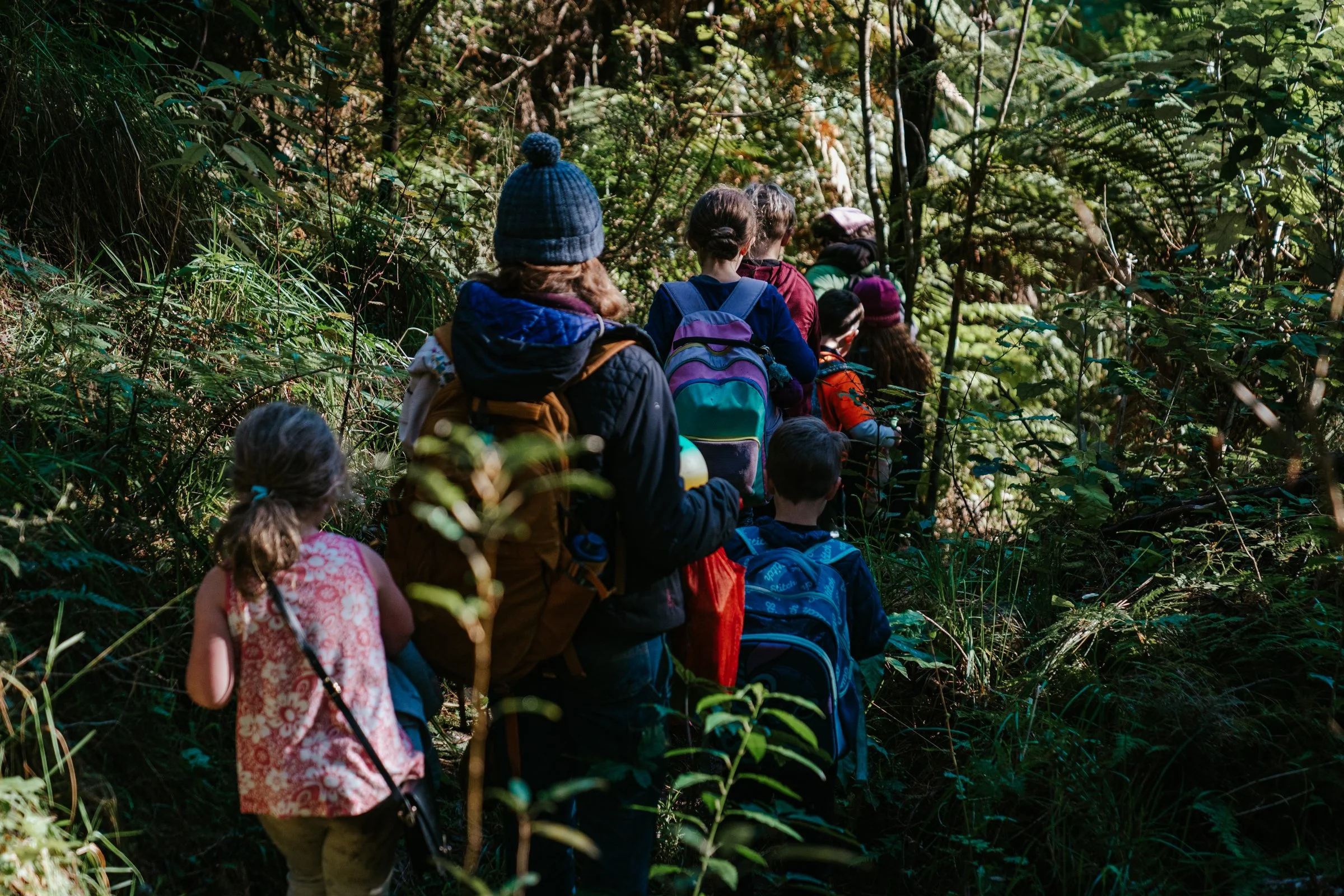
Most of our food now comes packaged, and some tamariki have never tasted an apple straight off the tree, or learned to understand the herbs growing beneath their feet. That knowledge thins a little with each generation. We would like to thicken it again.
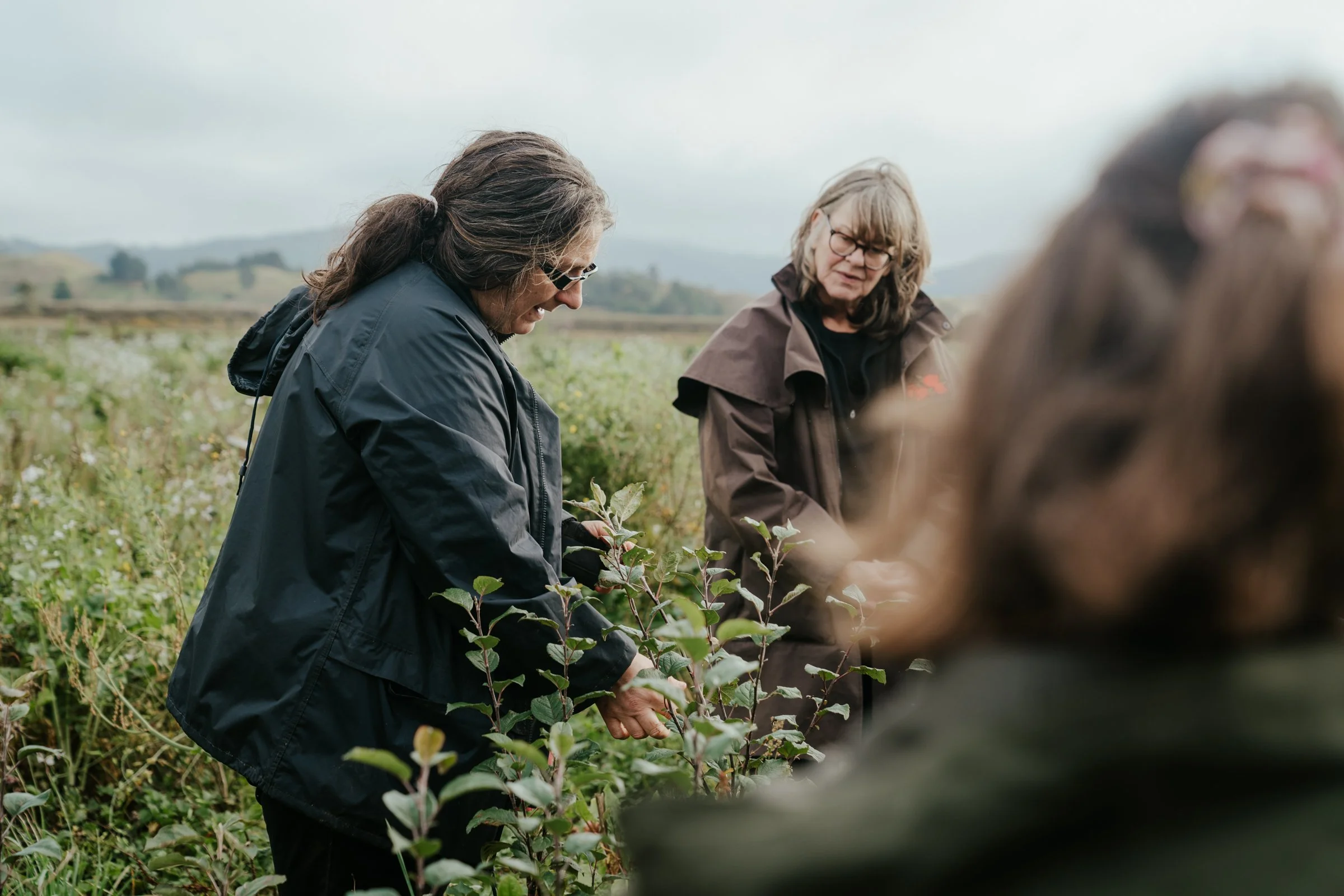
So we are turning our existing farm loop into a living trail of abundance. The route moves through different worlds as you walk it: heritage fruit — apples, pears, quinces, mulberries, medlars; medicinal herbs, Native, Western and Chinese, the beginnings of a rongoa garden you can stand inside; native and ethnobotanical food species; nuts, staples and climate-adapted future foods; and pollinator and bird habitat zones humming alongside the path.
This is years of syntropic and permaculture groundwork, laid down by Zeb and the team, finally giving birth to something you can walk through.
An orchard that teaches and heals you as you move through it — where agroforestry, permaculture and community wellbeing meet.
Help us fundraise for this kaupapa
We are raising $15,000 through the Ma Earth Round 3 funding round to activate the trail, and we want to be plain about where it goes — because a trail like this is really a long list of small, hopeful acts. Most of it goes into the ground: a hundred fruit and nut trees, and a heritage nursery where we propagate the herbs and support species that knit the whole system together.
Then there is the part that lets the trail teach those who wander. Wayfinding and educational signage, designed by Graedon Parker, so a family can name what they are looking at without a guide beside them. There is the storytelling and media to carry the trail beyond the farm gate. There is a community planting day, because this is meant to begin with many hands. And there is fencing, plain and necessary, to protect young trees from stock while they find their feet.
None of it is dramatic on its own. Together, it is a deal struck with the future — intergenerational abundance, planted now, harvested by people we may never meet.
How the round works, and why anything helps
Here is the part worth understanding before you give. Ma Earth runs on quadratic funding. The matching pool — drawn from the Biome Trust and the Naia Trust, and shared across more than 200 projects — is divided not by who gives the most, but by how many people give at all.
We will say this honestly: the Biome Trust is Mangaroa's own parent trust, so this is genuinely community-matched, not a distant windfall. What that means for you is unusual, and lovely. A gift of $5 from one more person can do more for this trail than a much larger gift, because it adds another voice to the count. More supporters, a bigger slice of the match.
So the number that matters most to us is not dollars. It is people. We are hoping for hundreds. There are two small things that make your gift go furthest.
Give anything — even $5. And verify your email when Ma Earth asks, because verification is what unlocks the match, often five to ten times over.
An unverified gift still helps; a verified one helps many times more. The Ma Earth platform takes no fee, so apart from Stripe's processing, what you give reaches the trail — and you can choose to cover that too.
Donations open on Tuesday 1 July and close on Monday 21 July.
Come together for intergenerational food
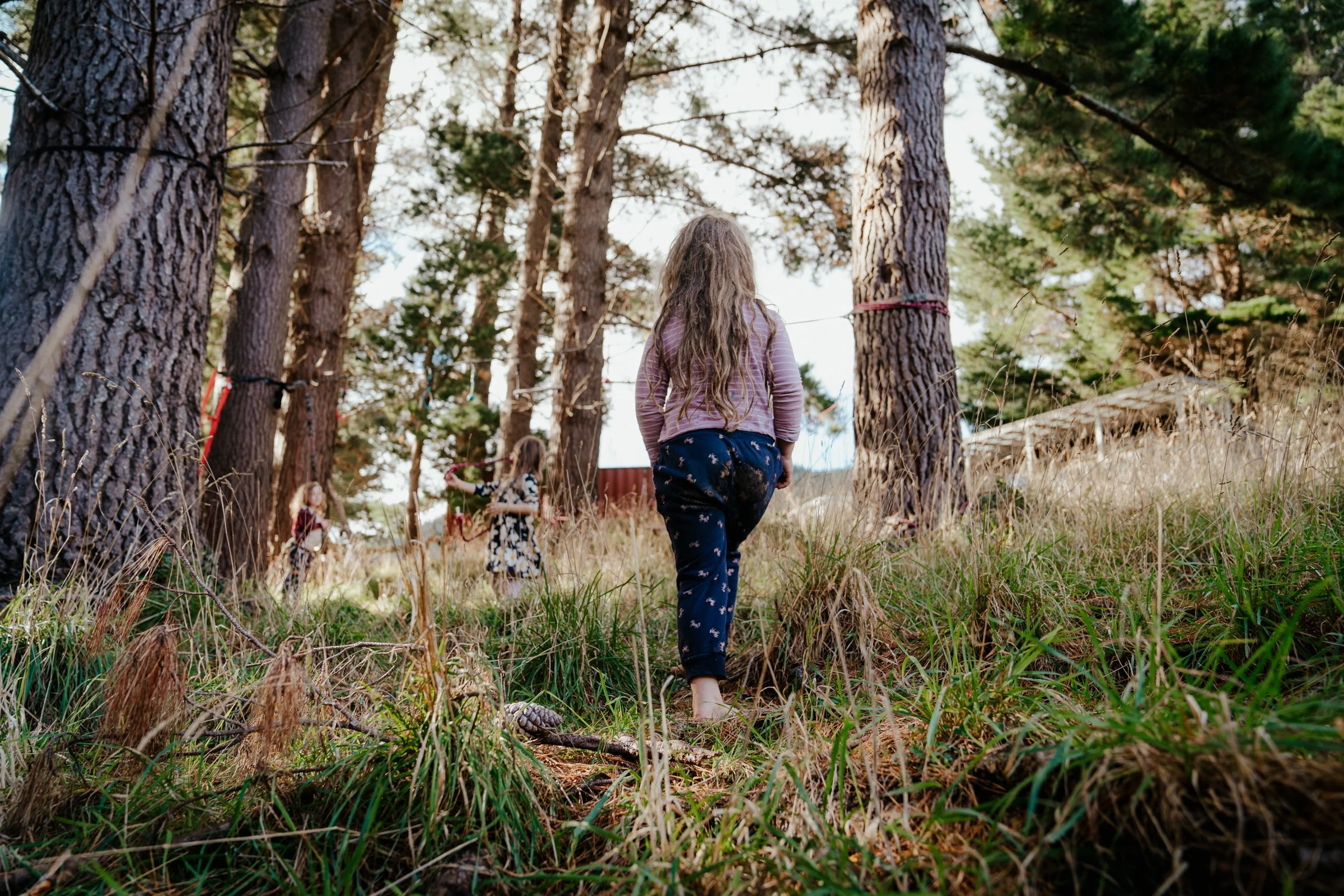
We have always believed the answer is community. A trail like this cannot be bought into being by a few; it has to be planted by many, the way an orchard is.
If you have ever wanted to put something living into the ground for the people who come after you, this is a way to do it — without lifting a spade, though we would love to see you at the planting day too.
Come home to the land with us. Help plant the first seeds of an intergenerational food system, right here alongside Te Awa Kairangi.
Give anything — even $5 — at the Ma Earth page here, and remember to verify your email to unlock the match.
Every gift, and every name behind it, brings the Fruit & Forage Loop closer to the ground.